Article Tags
Data Centres: AI vs the Climate
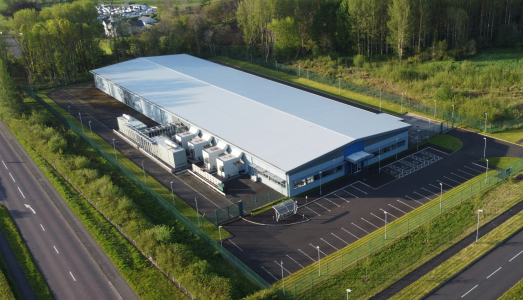
The proliferation of AI in recent years has seen a boom in data centre construction globally. Yet their rapid expansion raises important questions about energy consumption, environmental impact and the future of technology employment.
Why Data Centres Matter
In 2024, the UK Government designated datacentres as Critical National Infrastructure, placing them alongside utilities such as energy and water. The decision reflected the growing importance of digital infrastructure to economic growth, public services and sovereign AI.
The growth trajectory is remarkable. Ten miles (16km) west of London, Slough has become one of the largest datacentre hubs in the world, hosting an estimated 30 to 40 huge facilities, many of them on a campus in the centre of town. Emerging research suggests datacentres create a heat island effect, pushing up temperatures in their immediate vicinity by an average of 2C, and as much as 9C.
The AI Boom Is Driving Demand
Every AI breakthrough depends on massive computing resources. AI requires thousands of specialised, power-hungry chips (GPUs) running continuously in data centres that require huge amounts of energy to run, and thousands of litres of water to keep cool.
As organisations increasingly adopt generative AI, autonomous systems, computer vision and predictive analytics, demand for data centre capacity continues to accelerate.
The UK Government's AI Growth Zones initiative recognises this challenge, aiming to increase domestic data centre capacity and create hubs where AI infrastructure can be developed more rapidly. Access to compute power is essential if the UK is to compete with the US and China.
The Environmental Challenge
While the economic opportunity is significant, environmental concerns surrounding data centres are becoming increasingly difficult to ignore.
Recent estimates suggest data centres accounted for approximately 2% to 2.5% of UK electricity demand in the mid-2020s, with projections indicating substantial growth as AI adoption increases.
The concern is not simply how much electricity datacentres consume, but how quickly demand is rising. As demand grows, environmental concerns will increase and are focused on:
- Electricity consumption
- Carbon emissions
- Water usage for cooling
- Grid capacity
- Land utilisation
- Impact on local infrastructure
Growing Global Pushback
New York has now temporarily banned hyperscale datacentres for the next 12 months in order to prevent soaring utility bills and protect the environment; ‘hyperscale’ being defined as facilities requiring 50 megawatts or more of electricity.
Can Sustainability and Growth Co-Exist?
To further illuminate the problem, Microsoft’s emissions have increased by 25% in the last year alone, as the tech giant ramps up construction on the datacentres needed to fulfil its AI ambitions.
In 2020, Microsoft set some highly ambitious climate pledges. This included being carbon negative by 2030 and removing from the environment all the carbon it has emitted since it was founded by 2050.
But since 2022, and the firm’s decision to embed Copilot across its software portfolio, total emissions have essentially doubled, reaching 34 million metric tons. It now looks extremely unlikely that Microsoft will meet its 2030 carbon negative goal.
Sustainability has become a major focus for the sector with many businesses investing heavily in:
- Renewable energy procurement
- Energy-efficient cooling systems
- Waste heat recovery projects
- Improved server utilisation
- Low-carbon infrastructure design
A 2023 study based on GPT-3 found that asking a series of 10 to 50 questions can consume the equivalent of 500ml of water in data centre cooling. This figure has since been revised to 15ml for today’s systems, including water used to generate the electricity. Google reported an even lower figure in 2025 of 0.26ml (about 5 drops).
What Does This Mean For Jobs?
Modern datacentres are highly automated and employ relatively small teams compared to their scale. However, their wider economic impact is substantial because they enable growth across the entire digital economy.
Research suggests the UK datacentre sector supports tens of thousands of jobs directly and indirectly. More importantly for technology recruitment, datacentre growth fuels demand for skilled professionals across:
- Software Engineering
- AI and Machine Learning
- Cloud Architecture
- DevOps
- Cyber Security
- Data Engineering
- Infrastructure Engineering
- Technical Operations
As AI adoption accelerates, competition for these skills is likely to intensify.