Article Tags
Oxford Tech Recruitment: Hiring AI & Deep Tech Talent
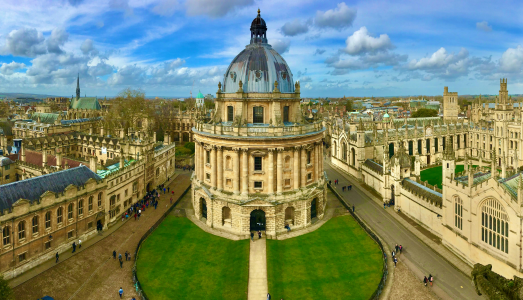
Oxford has long been recognised as one of the world's leading centres for research and innovation. Today, the wider Oxfordshire region, including the University of Oxford, The Oxford Science Park, Harwell Science & Innovation Campus, Begbroke Science Park and Culham Campus, has evolved into one of Europe's most dynamic technology clusters.
The cluster has attracted significant VC investment, creating thousands of highly skilled jobs, and producing a growing number of high-value startups, scaleups and university spin-outs.
Oxford Innovation
Oxford's technology sector is underpinned by a unique combination of world-class academic research, investment capital and specialist science infrastructure.
The University of Oxford ranks first in Europe for spin-out value and academic spin-out generation - over 350 companies in total with a value of £13.5B. The university's commercialisation arm, Oxford University Innovation, has been a major driver in the acceleration of spin-out creation in recent years with over 100 companies generated since 2020.
A critical part of this success has been the role of Oxford Science Enterprises, which has invested more than £3 billion into over 100 Oxford companies spanning Deep Tech, HealthTech, and Life Sciences.
Together with incubators and networks such as OX1 Incubator, EnSpire and Equinox, world-class science parks and research labs, and proximity to Cambridge and London, the result is a thriving ecosystem where breakthrough research is increasingly being transformed into commercial technology businesses capable of scaling globally.
A Unique Market for PhD and Research Talent
One of Oxford's distinguishing features is its exceptional concentration of PhD-qualified candidates and research scientists.
Unlike many UK technology hubs, a significant proportion of Oxford's startups emerge directly from university research laboratories. As a result, employers frequently recruit candidates with postgraduate and doctoral qualifications and academics transitioning from research into commercial environments.
The flow of talent from the University of Oxford, research institutes at Harwell Campus, and associated innovation centres provides employers with access to this highly specialised expertise making it almost unique in the UK.
The Oxford Science Park
The Oxford Science Park has become one of the UK's leading destinations for science and technology businesses.
The park hosts companies from early-stage spin-outs to multinational technology businesses, working in life sciences, AI, therapeutics and advanced technologies.
These include:
- Oxford Nanopore Technologies – a global leader in genome sequencing technology
- Exscientia - artificial intelligence for high-speed, precision drug discovery
- Barinthus Biotherapeutics (formerly Vaccitech) - an immunotherapy and vaccine developer renowned for its key role in creating the Oxford-AstraZeneca Covid-19 vaccine
- Oxa (formerly Oxbotica) - developer of software for self-driving vehicles
- Oxford PV - renewable energy pioneer in high-efficiency, low-cost solar photovoltaic technology
- Nominet – runs the .uk internet domain registry alongside cyber security innovations
- Numerous AI and healthcare technology spin-outs emerging from university research programmes.
Harwell Campus
Located south of Oxford, Harwell Campus has become one of Europe's most important science and deep tech innovation clusters.
The campus is home to more than 200 organisations spanning quantum computing, space technology, AI, life sciences, health technology, advanced manufacturing, defence and energy innovation. The cluster benefits from more than £3 billion of public investment and hosts world-leading facilities including the National Quantum Computing Centre, the European Space Agency and the Diamond Light Source.
Harwell experienced significant growth during 2025, with 33 companies relocating or expanding on the campus. The launch of the Harwell Quantum Cluster alone aims to attract more than 100 quantum companies, create 1,000 high-value jobs and generate £1 billion of investment over the coming decade.
Notable Harwell companies include:
- Oxford Dynamics - AI and autonomous systems
- Amber Therapeutics - Medical technology
- QuEra Computing - Quantum Computing
- Moderna - Biotechnology
- Lacuna Space – IoT Connectivity
- Oxford Space Systems – Satellite antennas
Oxford Tech Hiring Demand 2026
Despite wider economic uncertainty, investment into Oxford tech companies remains strong; OSE portfolio companies raised more than £400 million during 2025 alone. Recent successes include the $1.075 billion acquisition by US quantum computing leader, IonQ, of the pioneering Department of Physics spin-out, Oxford Ionics.
Most In-Demand Tech Roles in Oxford
For technology professionals, Oxford offers a wide range of opportunities across AI, Deep Tech, Cyber Security, Quantum Computing, HealthTech, CleanTech, Life Sciences and Space Technology.
The strongest demand is currently seen in:
- Artificial Intelligence & Data - Machine Learning Engineers, AI Researchers, Data Scientists, MLOps Engineers, AI Product Managers
- Deep Tech & Robotics - Robotics Engineers, Computer Vision Engineers, Embedded Software Engineers, Systems Engineers, Control Systems Specialists
- Cyber Security - Security Engineers, Security Architects, Governance, Risk and Compliance Professionals, Penetration Testers, Cloud Security Specialists
- Life Sciences, MedTech and BioTech - Software Engineers for Medical Devices, Bioinformatics Specialists, Scientific Computing Professionals, Quality and Regulatory Specialists, Product Development Engineers
Oxford’s Competitive Advantage
Beyond the strength of its startup ecosystem, Oxford's real competitive advantage is its concentration of highly qualified technical talent. From graduate software engineers to PhD researchers commercialising cutting-edge technologies, the region offers one of the deepest pools of AI, robotics, computer vision, cyber security, life sciences and deep tech expertise anywhere in Europe.
The challenges facing Oxford are well known to UK tech clusters. Although over 90% of spin-outs stay in the region, around half of these move out of the area once they start to scale quickly, and two thirds of all unicorns eventually move their HQ.
Housing availability and laboratory space constraints are also major factors for the Oxford cluster. The emergence of the Oxford-Cambridge supercluster, taking in Milton Keynes and Stevenage, aims to create an economic growth corridor, with the completion of the East West Rail link to provide a vital connection for labs and talent.
Hiring in Oxford? Book a call with RWA.