Article Tags
Physical AI - Skills, Hiring, and Talent Trends
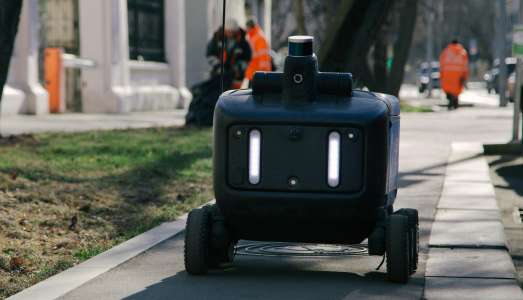
Artificial intelligence is no longer confined to screens. From autonomous robots in warehouses and drones performing inspection tasks, to computer vision systems interpreting complex physical environments in real time, Physical AI is increasingly required to see, move, react, and make decisions under real-world constraints.
These systems rely heavily on computer vision, sensor data, and real-time processing, requiring engineers who can bridge software and hardware environments.
This shift is fundamentally changing not just how products are built, but how engineering teams are structured and, critically, how talent is hired.
Unlike traditional software or pure-play machine learning teams, Physical AI sits at the intersection of computer vision, robotics, edge computing, and systems engineering. The result is a significantly smaller and more specialised talent pool.
The consequence? Hiring for Physical AI roles is rapidly becoming one of the most competitive challenges in tech recruitment.
The Most In-Demand Physical AI Skills in 2026
The most sought-after candidates are multi-disciplinary engineers with specialist physical AI research skills plus a strong software engineering background (C++, Python).
Breaking this down further:
Autonomous Platforms - drone swarms, self-driving military vehicles, maritime autonomous systems
Skills: robotics, control systems, reinforcement learning, simulation environments.
Edge AI and Embedded Systems - real-time AI processing on devices, low-power, high-performance computing
Skills: embedded C/C++, FPGA, edge ML optimisation, real-time OS.
Computer Vision and Perception - combining camera, radar, LiDAR data, object detection, and situational awareness
Skills: computer vision, sensor integration, SLAM (Simultaneous Localization and Mapping), 3D reconstruction, multi-camera systems
Human-Machine Interfaces - augmented reality (AR) for soldiers, wearable AI systems
Skills: UX for critical systems, AR/VR development, cognitive engineering
Cyber-Physical Security - protecting AI-enabled hardware from cyber threats, ensuring reliability in adversarial environments
Skills: secure systems engineering, AI robustness, embedded cybersecurity
Recruitment Challenges in Physical AI
Small and highly specialised talent pool
The intersection of machine learning, robotics, and real-world deployment significantly narrows the number of qualified candidates.
Experience gap between academia and industry
Many candidates have strong research backgrounds but lack commercial deployment experience, exposure to real-world constraints and systems engineering knowledge.
High competition for proven candidates
Engineers with real-world experience in Physical AI systems are being heavily targeted by Big Tech AI labs, autonomous vehicle companies, robotics and defence startups and scaleups.
Security Clearance
Roles at companies supplying defence contracts often require government security clearances including British citizenship, NATO country citizenship, or residency restrictions. This significantly narrows the available talent pool further.
Academic Achievement
Due to the nature of the work, roles in Physical AI often require a higher level of education - a PhD in a STEM subject is a common requirement, as well as coding skills.
Hiring Strategies
Companies are rapidly seeking talent capable of designing, deploying, and maintaining these systems and adapting their hiring strategies to prioritise quality over volume. Rather than reviewing dozens of CVs, CTOs are focusing on carefully selected and thoroughly vetted shortlists.
Success won’t just depend on technology choices - it will depend on sourcing and securing the right talent, at the right speed.
Contact us to find out more.