Article Tags
Magnifica Humanitas - Responsible AI and Human Identity
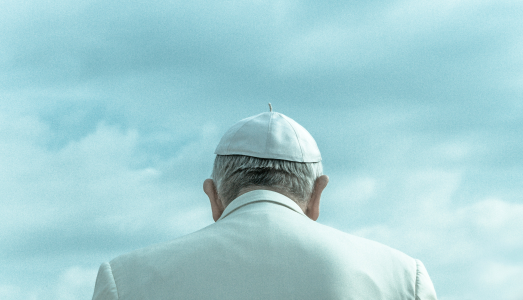
In his first encyclical - one of the Catholic church’s highest forms of teaching - Pope Leo XIV called for stronger AI rules, independent oversight and political accountability.
Presented alongside an Anthropic co-founder, Pope Leo urged policymakers to protect worker’s rights and shield children from the technology, while warning against arms industry profits driving wars.
At a time when AI is beginning to redefine the economy, politics, democracy, work, communication and even our very understanding of what it means to be human, the Magnifica Humanitas represents an event of enormous intellectual, ethical and institutional significance.
The message at its core is summed up by the line:
“In the age of artificial intelligence [...] we have the urgent duty to remain profoundly human.”
This is not merely a religious document. Like the great social encyclicals of history - from Rerum Novarum to Laudato Si - this text offers a profound reflection on the civilisational direction of our age and on our collective responsibility in the face of an unprecedented technological transformation.
AI Is Not Neutral
The encyclical warns that AI is not neutral.
Behind every system, algorithm and digital infrastructure lie human decisions, economic interests, cultural visions and structures of power. The real debate is no longer simply about what AI can do, but rather about what kind of humanity we wish to preserve and what kind of society we intend to build.
Initial responses from those working in legislative, institutional and academic spheres, suggests that the document provides an extraordinarily fertile framework for reflecting upon some of the defining issues of our time: democratic governance of AI; technological regulation; fundamental rights; algorithmic transparency; protection of human labour; digital sovereignty; multilateralism; and the role of parliaments in the face of emerging global technological power.
The Message Is Not Anti-Technology
Quite the opposite: it recognizes the power of AI to support education, medicine, communication, productivity, and human flourishing. But it also asks the harder question: Are we building AI that serves the human person - or systems that slowly reshape people into data points, consumers, workers to optimize, or risks to manage?
Particularly valuable is the appeal to avoid a new “Technological Babel” - marked by the concentration of power, homogenisation and dehumanisation - and instead to pursue a collective reconstruction of human coexistence grounded in dignity, justice, dialogue and the common good.
Formation
“What kind of people are these tools forming us to become?”
That word ‘formation’ is the one the tech conversation keeps missing. When Pope Leo told a student to use AI "in such a way that if it disappeared tomorrow, you would still know how to think," he wasn't being folksy. He was making a precise formational claim: repeated reliance on a tool that thinks for you degrades your capacity to think 𝘢𝘵 𝘢𝘭𝘭.
The tech industry already understands formation – under different names: habit loops, engagement, retention. Ergo, they've built the most sophisticated formation systems in history.
Yet formation toward what?
The Challenge For Organisations And Leaders
If formation is the real issue, then every organisation needs to ask the question: what habits, dispositions, and dependencies are we building into the people who use these systems?
This is not a question your IT department can answer. It is a human question that requires the kind of thinking that virtue ethicists, educators, and formational traditions have been doing for centuries.
Transhumanism and Posthumanism
The encyclical also brings transhumanism and posthumanism into the discussion, ideas which have been largely missing from public discourse.
"… individuals and peoples hindered or denied access to basic technologies, communities exposed to invasive surveillance and social groups penalized by opaque algorithms that perpetuate prejudice and discrimination."
The Pope explains their significance:
"These perspectives form the ideological background present in some centres of technological power and occupy the collective imagination in a simplified form, especially in the media and on social networks. They tend to foster enthusiasm for new technologies through a futuristic vision of an “enhanced human being” or “human-machine hybrid.”
Leo has shifted the shadows into the foreground and opened up a much more expansive field for discussion by his inclusion of these topics.
The Task Ahead
The challenge is clear: AI must be judged not only by what it can do, but by what it does to people, work, truth, freedom, and the common good.
Pope Leo has been saying it for a year: “The challenge is not technological, but anthropological.” A responsible AI future will require more than good models. It will require moral clarity.